I'm a supplier of ion exchangers, and I get asked all the time about how to optimize ion exchange chromatography using ion exchangers. So, I thought I'd share some of my insights and tips to help you get the most out of your ion exchange chromatography process.
First off, let's talk a bit about what ion exchange chromatography is. It's a technique used to separate and purify charged molecules, like proteins, nucleic acids, or small ions, based on their charge properties. The key player in this process is the ion exchanger. An ion exchanger is a resin that has charged functional groups attached to it. These groups can attract and bind to oppositely charged molecules in a sample, allowing you to separate the components based on their charge differences.
Now, here are some tips on how to optimize this process:
1. Choose the Right Ion Exchanger
This is crucial. There are two main types of ion exchangers: cation exchangers, which have negatively charged groups and bind to positively charged molecules, and anion exchangers, which have positively charged groups and bind to negatively charged molecules. You need to pick the right type based on the charge of the molecules you're trying to separate.
For example, if you're working with a protein that has a net positive charge at a certain pH, you'd want to use a cation exchanger. Also, consider the capacity of the ion exchanger. The capacity refers to the maximum amount of charged molecules the resin can bind. If you have a large sample with a high concentration of target molecules, you'll need an ion exchanger with a high capacity.
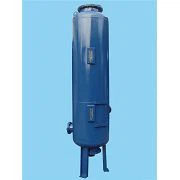
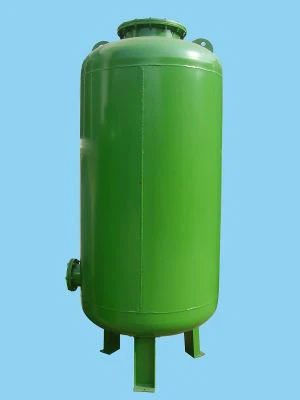
We offer a variety of ion exchangers to suit different needs. Check out our Stainless Steel Ion Exchange Softening Vessel For Resin Water Softener Equipment and High Efficiency Hardness Removal Industrial Water Softener Equipment Sodium Stainless Steel Carbon Steel Ion Exchanger for some great options.
2. Optimize the Buffer Conditions
The buffer you use plays a huge role in the ion exchange process. The pH of the buffer affects the charge of both the ion exchanger and the molecules in your sample. For instance, if you lower the pH in a cation exchange chromatography, you can increase the positive charge on the molecules, making them bind more strongly to the negatively charged ion exchanger.
The ionic strength of the buffer is also important. High ionic strength buffers can disrupt the electrostatic interactions between the ion exchanger and the molecules, causing them to elute more quickly. So, you can use a gradient of ionic strength to elute your target molecules in a controlled way.
3. Proper Column Packing
How well your ion exchange column is packed can significantly impact the separation efficiency. A well - packed column has uniform flow characteristics and minimizes band broadening. When packing the column, make sure to use a proper packing technique. You can use a slurry method, where you mix the ion exchanger resin with a buffer to form a slurry and then pour it carefully into the column.
It's also important to check for any air bubbles in the column. Air bubbles can cause uneven flow and poor separation. You can remove air bubbles by gently tapping the column or using a degassing step before packing.
4. Sample Preparation
Before loading your sample onto the ion exchange column, you need to prepare it properly. First, make sure the sample is clear and free of any particulate matter. You can filter the sample through a small - pore filter to remove any debris.
Adjusting the pH and ionic strength of the sample to match the starting buffer conditions of the column can also improve the binding of the target molecules to the ion exchanger. This helps to ensure that the molecules are in the right charge state for efficient binding.
5. Elution Strategy
There are different ways to elute the bound molecules from the ion exchanger. You can use a step - wise elution, where you change the buffer conditions in a series of discrete steps. For example, you can increase the ionic strength of the buffer in steps to elute different groups of molecules.
Another option is gradient elution, which is more commonly used. In gradient elution, you gradually change the buffer conditions, like the ionic strength or pH, over time. This allows for a more precise separation of the molecules based on their charge differences.

6. Regeneration and Reuse of the Ion Exchanger
Once you've completed the chromatography run, you can regenerate the ion exchanger for reuse. This involves removing any remaining bound molecules from the resin and restoring its original charge state. You can do this by washing the column with a high - ionic - strength buffer or a buffer with a different pH.
Regenerating the ion exchanger can save you money and reduce waste. However, make sure to follow the manufacturer's guidelines for regeneration to avoid damaging the resin.
7. Monitoring the Process
It's important to monitor the ion exchange chromatography process to ensure that everything is working as expected. You can use detectors, such as UV - Vis detectors, to monitor the elution of the molecules. By looking at the absorbance peaks in the chromatogram, you can determine the separation efficiency and the purity of the eluted molecules.
8. Troubleshooting
Sometimes, things don't go as planned. If you're experiencing poor separation, low recovery, or other issues, there are some things you can check. First, make sure the buffer conditions are correct. Incorrect pH or ionic strength can lead to problems with binding and elution.
Check the column packing. If the column is not packed uniformly, it can cause band broadening and poor separation. Also, make sure there are no blockages in the column or the tubing.
Finally, if you're still having problems, our team of experts is here to help. We've got years of experience in the ion exchanger business, and we can offer you advice and solutions to any issues you might encounter.
In conclusion, optimizing ion exchange chromatography using ion exchangers requires careful consideration of several factors, from choosing the right ion exchanger to monitoring the process and troubleshooting any problems. By following these tips, you can improve the efficiency and effectiveness of your ion exchange chromatography process.
If you're interested in purchasing high - quality ion exchangers for your chromatography needs, or if you have any questions or need further advice, feel free to reach out. We're here to help you make the most of your ion exchange chromatography setup.
References
- Scopes, R. K. (1994). Protein purification: principles and practice. Springer Science & Business Media.
- Janson, J.-C., & Ryden, L. (Eds.). (1989). Protein purification: principles, high resolution methods, and applications. Wiley.