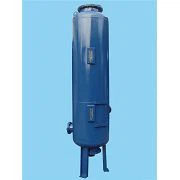
A mixing tank is a crucial piece of equipment in various industries, playing a vital role in numerous processes. As a leading supplier of mixing tanks, I have witnessed firsthand the diverse functions and applications of these essential vessels. In this blog post, I will delve into the functions of a mixing tank, exploring its significance in different sectors and highlighting the key features that make it an indispensable asset.
Homogeneous Mixing
One of the primary functions of a mixing tank is to achieve homogeneous mixing of different substances. Whether it's blending liquids, powders, or a combination of both, a mixing tank ensures that all components are uniformly distributed throughout the mixture. This is particularly important in industries such as food and beverage, pharmaceuticals, and chemicals, where precise and consistent mixing is essential for product quality and performance.
In the food and beverage industry, for example, mixing tanks are used to blend ingredients such as water, sugar, flavorings, and additives to create a variety of products, including juices, soft drinks, sauces, and dressings. By ensuring that all ingredients are thoroughly mixed, a mixing tank helps to achieve a consistent taste, texture, and appearance in the final product.
In the pharmaceutical industry, mixing tanks are used to prepare medications, vaccines, and other pharmaceutical products. Precise mixing is crucial in this industry to ensure that the active ingredients are evenly distributed throughout the formulation, resulting in a safe and effective product.
In the chemical industry, mixing tanks are used to combine various chemicals to produce a wide range of products, including paints, coatings, adhesives, and plastics. Homogeneous mixing is essential in this industry to ensure that the chemical reactions occur uniformly, resulting in a high-quality product with consistent properties.
Dissolution and Suspension
Another important function of a mixing tank is to facilitate the dissolution and suspension of solids in liquids. In many industrial processes, it is necessary to dissolve or suspend solid particles in a liquid medium to create a homogeneous solution or suspension. A mixing tank provides the necessary agitation and shear forces to break down the solid particles and disperse them evenly throughout the liquid.
In the water treatment industry, for example, mixing tanks are used to dissolve chemicals such as chlorine, fluoride, and alum in water to treat and purify it. By ensuring that the chemicals are evenly distributed throughout the water, a mixing tank helps to achieve effective disinfection, coagulation, and flocculation, resulting in clean and safe drinking water.
In the mining industry, mixing tanks are used to suspend ore particles in a liquid medium to facilitate the extraction of valuable metals. By ensuring that the ore particles are evenly distributed throughout the liquid, a mixing tank helps to improve the efficiency of the extraction process and increase the recovery of valuable metals.
Emulsification
Emulsification is the process of combining two immiscible liquids, such as oil and water, to form a stable emulsion. A mixing tank plays a crucial role in this process by providing the necessary agitation and shear forces to break down the oil droplets and disperse them evenly throughout the water phase.


In the cosmetic industry, for example, mixing tanks are used to produce emulsions such as creams, lotions, and ointments. By ensuring that the oil and water phases are thoroughly mixed, a mixing tank helps to achieve a stable and homogeneous emulsion with a smooth texture and consistent appearance.
In the food industry, mixing tanks are used to produce emulsions such as mayonnaise, salad dressings, and margarine. By ensuring that the oil and water phases are evenly distributed throughout the mixture, a mixing tank helps to achieve a stable and creamy emulsion with a rich flavor and texture.
Reaction and Chemical Processing
Mixing tanks are also used in various chemical reactions and processing applications. In many industrial processes, it is necessary to mix different chemicals together to initiate a chemical reaction or to carry out a specific chemical process. A mixing tank provides the necessary environment and conditions for these reactions to occur efficiently and effectively.
In the petrochemical industry, for example, mixing tanks are used to carry out various chemical reactions, such as polymerization, oxidation, and hydrogenation. By ensuring that the reactants are thoroughly mixed and the reaction conditions are carefully controlled, a mixing tank helps to achieve high yields and high-quality products.
In the biotechnology industry, mixing tanks are used to culture cells and microorganisms for the production of various biological products, such as vaccines, enzymes, and antibodies. By providing the necessary nutrients, oxygen, and agitation, a mixing tank helps to create a favorable environment for cell growth and proliferation, resulting in high yields of the desired biological product.
Heat Transfer
In some applications, mixing tanks are used to transfer heat between different substances. By circulating a heating or cooling medium through a jacket or coil surrounding the mixing tank, it is possible to control the temperature of the mixture inside the tank.
In the food and beverage industry, for example, mixing tanks are used to heat or cool products during the manufacturing process. By ensuring that the temperature of the product is carefully controlled, a mixing tank helps to maintain the quality and safety of the product and to prevent spoilage and contamination.
In the chemical industry, mixing tanks are used to carry out exothermic or endothermic reactions, which require the addition or removal of heat. By providing the necessary heat transfer capabilities, a mixing tank helps to control the reaction rate and to ensure that the reaction occurs under optimal conditions.
Key Features of a Mixing Tank
To perform these functions effectively, a mixing tank must have several key features. These features include:
- Agitation System: A mixing tank must have an agitation system to provide the necessary mixing and shear forces to achieve homogeneous mixing, dissolution, suspension, emulsification, and reaction. The agitation system can consist of a variety of components, such as impellers, turbines, propellers, and baffles.
- Material of Construction: The material of construction of a mixing tank is an important consideration, as it must be compatible with the substances being mixed and the operating conditions. Common materials of construction for mixing tanks include stainless steel, carbon steel, fiberglass, and plastic.
- Size and Capacity: The size and capacity of a mixing tank depend on the specific application and the volume of the mixture being processed. Mixing tanks can range in size from small laboratory-scale vessels to large industrial-scale tanks with capacities of several thousand gallons.
- Temperature and Pressure Control: In some applications, it is necessary to control the temperature and pressure of the mixture inside the mixing tank. This can be achieved by using a heating or cooling jacket, a coil, or a pressure relief valve.
- Cleaning and Sanitization: To ensure the quality and safety of the product, a mixing tank must be cleaned and sanitized regularly. This can be achieved by using a variety of cleaning methods, such as CIP (clean-in-place) systems, SIP (sterilize-in-place) systems, and manual cleaning.
Our Mixing Tank Products
As a leading supplier of mixing tanks, we offer a wide range of high-quality mixing tanks to meet the diverse needs of our customers. Our mixing tanks are available in various sizes, capacities, and materials of construction, and can be customized to meet specific application requirements.
Some of our popular mixing tank products include:
- Stainless Steel Sanitary Water Tank Cone: This mixing tank is made of high-quality stainless steel and is designed for use in the food and beverage, pharmaceutical, and cosmetic industries. It features a cone-shaped bottom for easy drainage and cleaning, and is available in various sizes and capacities.
- Stainless Steel Water Storage Pressure Filter Tank Ellipse Sanitary Water Tank Flange Ferrule Types: This mixing tank is made of high-quality stainless steel and is designed for use in the water treatment, chemical, and mining industries. It features an elliptical shape for increased strength and durability, and is available in various sizes and capacities.
- Stainless Steel Water Tank Ellipse: This mixing tank is made of high-quality stainless steel and is designed for use in the food and beverage, pharmaceutical, and cosmetic industries. It features an elliptical shape for increased strength and durability, and is available in various sizes and capacities.
Contact Us for Procurement and洽谈
If you are in the market for a high-quality mixing tank, we would be happy to help. Our team of experienced engineers and sales representatives can provide you with detailed information about our mixing tank products, and can help you select the right mixing tank for your specific application.
Please contact us today to discuss your mixing tank requirements and to request a quote. We look forward to hearing from you and to working with you to meet your mixing tank needs.
References
- Perry, R. H., & Green, D. W. (Eds.). (2008). Perry's Chemical Engineers' Handbook (8th ed.). McGraw-Hill.
- McCabe, W. L., Smith, J. C., & Harriott, P. (2005). Unit Operations of Chemical Engineering (7th ed.). McGraw-Hill.
- Coulson, J. M., & Richardson, J. F. (Eds.). (1999). Chemical Engineering (4th ed.). Butterworth-Heinemann.