Can ion exchangers be used in food and beverage industries?
Hey there! I'm a supplier of ion exchangers, and I often get asked if these nifty devices can be used in the food and beverage industries. Well, the short answer is yes, and in this blog, I'll dive into the details of how and why ion exchangers are a great fit for these sectors.
First off, let's quickly go over what ion exchangers are. In simple terms, an ion exchanger is a material that can exchange ions with its surrounding environment. It's like a little chemical swap meet inside a vessel. There are different types of ion exchangers, such as cation exchangers that swap positively charged ions and anion exchangers that deal with negatively charged ones.
Now, why would the food and beverage industries be interested in ion exchangers? One of the main reasons is water treatment. Water is a crucial ingredient in almost every food and beverage product. Whether it's for brewing beer, making soft drinks, or processing fruits and vegetables, the quality of water can have a huge impact on the final product.
Hard water, which contains high levels of calcium and magnesium ions, can cause all sorts of problems. It can leave scale deposits in pipes and equipment, which not only reduces efficiency but can also affect the taste and quality of the food or beverage. Ion exchangers can effectively remove these hardness - causing ions through a process called ion exchange. For example, a sodium - based cation exchanger can swap sodium ions for calcium and magnesium ions in the water, softening it.

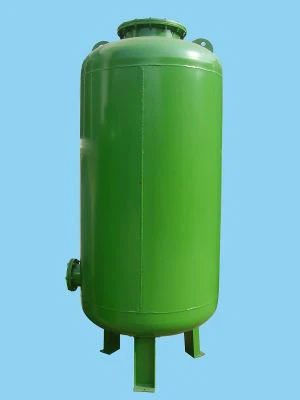
If you're looking for a reliable ion exchanger for water softening, we offer the Stainless Steel Ion Exchange Softening Vessel For Resin Water Softener Equipment. This vessel is made of high - quality stainless steel, which is durable and resistant to corrosion. It's designed to hold the ion exchange resin and facilitate the ion exchange process smoothly.
Another important application of ion exchangers in the food and beverage industries is in the purification of sugar solutions. During the sugar production process, impurities such as metal ions and organic acids can be present in the sugar syrup. Ion exchangers can be used to remove these impurities, resulting in a purer and higher - quality sugar product.
In the dairy industry, ion exchangers play a role in whey processing. Whey is a by - product of cheese production, and it contains valuable proteins and minerals. However, it also has some unwanted components. Ion exchangers can be used to separate and purify the whey proteins, making them suitable for use in various food products, such as protein bars and sports drinks.
When it comes to the beverage industry, ion exchangers are used in the production of bottled water. To meet the strict quality standards for bottled water, it's necessary to remove contaminants and adjust the mineral content. Ion exchangers can help achieve this by selectively removing or adding specific ions. For example, they can remove heavy metals like lead and mercury, which are harmful to human health.
We also have a great product for industrial water softening needs, the High Efficiency Hardness Removal Industrial Water Softener Equipment Sodium Stainless Steel Carbon Steel Ion Exchanger. This equipment is designed for large - scale operations in the food and beverage industries. It can handle high - volume water flow and effectively remove hardness ions, ensuring that the water used in production meets the required quality standards.
But it's not just about removing unwanted ions. Ion exchangers can also be used to add beneficial ions to food and beverages. For example, in the production of mineral water, ion exchangers can be used to add minerals like calcium, magnesium, and potassium to the water, giving it a healthy and refreshing taste.
Now, you might be wondering about the safety of using ion exchangers in food and beverage production. Well, the ion exchange resins used in these applications are carefully selected and tested to ensure they meet food - grade standards. They are made from materials that are non - toxic and do not leach harmful substances into the food or beverage.
In addition to water treatment and purification, ion exchangers can also be used in the separation and recovery of valuable components in food processing. For example, in the fruit juice industry, ion exchangers can be used to separate and recover natural flavors and pigments from the juice. This not only improves the quality of the juice but also allows for the reuse of these valuable components in other products.
So, as you can see, ion exchangers have a wide range of applications in the food and beverage industries. They can improve the quality of water, purify raw materials, and enhance the overall production process.
If you're in the food or beverage industry and are looking for a reliable ion exchanger solution, don't hesitate to get in touch. We have a team of experts who can help you choose the right ion exchanger for your specific needs. Whether you're a small - scale artisanal food producer or a large - scale beverage manufacturer, we have the products and knowledge to support your production.
In conclusion, ion exchangers are a valuable tool in the food and beverage industries. They offer a cost - effective and efficient way to improve product quality and ensure the smooth operation of production processes. So, if you haven't considered using ion exchangers in your business yet, now might be the time to do so.
References
- "Ion Exchange Technology in the Food and Beverage Industry" - Journal of Food Science and Technology
- "Water Treatment for the Food and Beverage Industry" - American Water Works Association