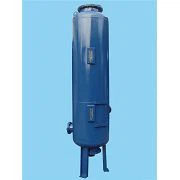
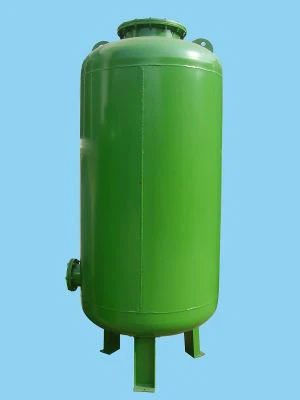
Yo! So, I'm in the biz of selling dissolution tanks, and people often hit me up asking about the difference between a dissolution tank and a mixing tank. It's a pretty common confusion, and I get it – they might seem similar at first glance, but they've got some key differences. Let's dive into it!
What's a Dissolution Tank?
A dissolution tank, as the name suggests, is all about dissolving stuff. You know, when you want to turn a solid into a liquid solution. It's like when you make a cup of coffee and stir in the sugar until it completely disappears into the liquid. That's basically what a dissolution tank does on an industrial scale.
We use dissolution tanks in a ton of industries. For example, in the pharmaceutical industry, you need to dissolve active ingredients into a liquid base to make medications. In the food and beverage industry, it's used to dissolve flavorings, sweeteners, and other additives into the product. And in the chemical industry, well, there are countless processes where you need to dissolve one substance into another.
One of the main features of a dissolution tank is that it usually has some kind of agitation system. This could be a simple paddle stirrer or a more complex impeller. The agitation helps to speed up the dissolution process by increasing the contact between the solid and the liquid. It also ensures that the solution is homogeneous, which means that the dissolved substance is evenly distributed throughout the liquid.
Another important aspect of a dissolution tank is the temperature control. Some substances dissolve better at higher temperatures, while others need to be kept cool. So, we often equip our dissolution tanks with heating or cooling systems to maintain the optimal temperature for the dissolution process.
What's a Mixing Tank?
Now, let's talk about mixing tanks. A mixing tank is designed to combine two or more substances together. These substances can be liquids, solids, or even gases. The goal is to create a uniform mixture where all the components are evenly distributed.


Mixing tanks are used in a wide range of applications, just like dissolution tanks. In the paint industry, for example, you need to mix different pigments and solvents to create the right color and consistency. In the wastewater treatment industry, mixing tanks are used to blend chemicals with the wastewater to treat it. And in the cosmetic industry, they're used to mix various ingredients like oils, creams, and fragrances.
The agitation system in a mixing tank is also crucial. It needs to be powerful enough to thoroughly mix all the components together. Depending on the type of mixing required, the agitation system can vary from a simple propeller mixer to a high-shear mixer. High-shear mixers are used when you need to break down particles or create a fine emulsion.
Unlike dissolution tanks, mixing tanks don't necessarily have to focus on dissolving a solid into a liquid. They can mix substances that are already in the same phase, or even substances that are immiscible (like oil and water) to create an emulsion.
Key Differences
So, what are the main differences between a dissolution tank and a mixing tank?
Purpose
The most obvious difference is the purpose. A dissolution tank is mainly for dissolving a solid into a liquid, while a mixing tank is for combining different substances together, regardless of their state. For example, if you want to dissolve salt in water, you'd use a dissolution tank. But if you want to mix paint colors or blend different types of juice, you'd go for a mixing tank.
Agitation
The agitation requirements are also different. In a dissolution tank, the agitation is mainly to speed up the dissolution process and ensure homogeneity. In a mixing tank, the agitation needs to be more powerful and sometimes more complex to achieve a thorough mix, especially when dealing with immiscible substances or large volumes.
Temperature Control
As I mentioned earlier, temperature control in a dissolution tank is often crucial because the solubility of a substance can be highly dependent on temperature. In a mixing tank, temperature control might be important in some applications, but it's not always as critical as in a dissolution tank.
Our Dissolution Tanks
As a dissolution tank supplier, I'm really proud of the products we offer. Our dissolution tanks are made of high-quality materials, usually stainless steel, which is durable, corrosion-resistant, and easy to clean. We offer a variety of sizes to meet different production needs, from small-scale laboratory tanks to large industrial ones.
Our tanks are equipped with state-of-the-art agitation systems and temperature control devices. The agitation systems are designed to provide efficient and uniform mixing, ensuring that the dissolution process is fast and complete. And the temperature control devices allow you to precisely adjust the temperature according to the requirements of your process.
If you're in the market for a dissolution tank, we've got you covered. Whether you're in the pharmaceutical, food and beverage, or chemical industry, our tanks can be customized to fit your specific needs.
Related Products and Links
If you're interested in other types of tanks, we also have some great options. Check out our Stainless Steel Industrial 500L - 10000L Fermenter Beer Wine Brewing Vessel Fementation Storage Tank. It's perfect for brewing beer or wine on an industrial scale. And if you want to learn more about the beer fermentation process, take a look at Beer Fermentation Exposed. We also offer Stainless Steel Fermentation Tank Polished Or Sandblast External Surface Tri Clamp Ferrule Connection Size Customized, which can be tailored to your exact specifications.
Let's Talk
If you're thinking about getting a dissolution tank or have any questions about the differences between dissolution tanks and mixing tanks, don't hesitate to reach out. We're here to help you find the right solution for your business. Whether you need a small tank for a pilot project or a large one for full-scale production, we've got the expertise and the products to meet your needs.
References
- Chemical Engineering Handbook
- Industrial Processing Equipment Manual