Can ion exchangers be used in desalination?
Desalination, the process of removing salt and other impurities from seawater or brackish water to make it suitable for various uses such as drinking, irrigation, and industrial applications, has become an increasingly important solution to the global water scarcity problem. In recent years, ion exchangers have emerged as a potential technology for desalination. As a leading Ion Exchanger supplier, I'd like to explore this topic in detail.
How Ion Exchangers Work
Ion exchangers are materials that can exchange ions with their surrounding environment. They typically consist of a solid matrix, often in the form of resin beads, which are functionalized with specific ionic groups. These groups can attract and bind certain ions from a solution while releasing other ions in a reversible process.
For example, in a common water softening application, a cation exchange resin contains negatively charged functional groups that attract and bind positively charged calcium and magnesium ions (the main causes of water hardness) from the water. In exchange, the resin releases sodium ions into the water. This process effectively reduces the hardness of the water.
Ion Exchangers in Desalination
When it comes to desalination, the goal is to remove a wide range of ions, including sodium, chloride, sulfate, and others, from the water. Ion exchangers can play a role in this process, but their effectiveness depends on several factors.
One approach is to use a combination of cation and anion exchange resins. Cation exchange resins can remove positively charged ions such as sodium, calcium, and magnesium, while anion exchange resins can remove negatively charged ions such as chloride, sulfate, and carbonate. By passing the water through a series of these resins, a significant amount of salt can be removed.
However, there are some challenges associated with using ion exchangers for desalination. One of the main issues is the high salt concentration in seawater or brackish water. The large amount of ions in the water can quickly saturate the ion exchange resins, requiring frequent regeneration. Regeneration involves flushing the resins with a concentrated solution of a different ion to displace the bound ions and restore the resin's capacity. This process can be costly and time-consuming, especially in large-scale desalination plants.
Another challenge is the selectivity of the ion exchange resins. Different ions have different affinities for the resin functional groups, and some ions may be more difficult to remove than others. For example, certain trace elements or organic compounds in the water may interfere with the ion exchange process or cause fouling of the resins, reducing their performance over time.
Advantages of Using Ion Exchangers in Desalination
Despite these challenges, ion exchangers also offer several advantages for desalination. One of the main benefits is their ability to produce high-quality water with low levels of dissolved salts and other impurities. Ion exchange can be very effective at removing specific ions, allowing for precise control over the water quality. This makes it suitable for applications where high-purity water is required, such as in the pharmaceutical or electronics industries.
Ion exchangers are also relatively simple to operate and maintain compared to some other desalination technologies. They do not require high-pressure pumps or complex membrane systems, which can reduce the capital and operating costs associated with desalination. Additionally, ion exchange resins can be easily replaced or regenerated, providing a flexible and scalable solution for different water treatment needs.

Our Ion Exchanger Products for Desalination
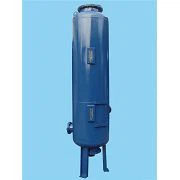
As an Ion Exchanger supplier, we offer a range of products that can be used in desalination applications. Our Stainless Steel Ion Exchange Softening Vessel For Resin Water Softener Equipment is designed to provide a reliable and efficient platform for ion exchange processes. Made from high-quality stainless steel, it offers excellent corrosion resistance and durability, ensuring long-term performance in harsh water treatment environments.
We also offer the High Efficiency Hardness Removal Industrial Water Softener Equipment Sodium Stainless Steel Carbon Steel Ion Exchanger, which is specifically designed for industrial applications where high-capacity and high-performance ion exchange is required. This equipment is available in both stainless steel and carbon steel construction, allowing for customization based on the specific requirements of the desalination project.
Conclusion
In conclusion, ion exchangers can be used in desalination, but their suitability depends on the specific application and the characteristics of the water being treated. While there are challenges associated with using ion exchangers for desalination, such as high salt concentrations and resin fouling, they also offer several advantages, including high water quality, simplicity of operation, and flexibility.
As an Ion Exchanger supplier, we are committed to providing our customers with high-quality products and solutions for desalination and other water treatment applications. If you are interested in learning more about our ion exchanger products or discussing your desalination needs, please feel free to contact us for a consultation. We look forward to working with you to find the best solution for your water treatment requirements.
References
- Helfferich, F. (1962). Ion Exchange. McGraw-Hill.
- Wankat, P. C. (1990). Separation Process Engineering. Prentice Hall.
- Crittenden, J. C., Trussell, R. R., Hand, D. W., Howe, K. J., & Tchobanoglous, G. (2012). Water Treatment: Principles and Design. Wiley.