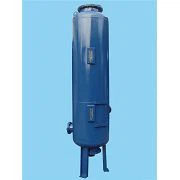
Yo! As a pressure vessel supplier, I've seen my fair share of issues when it comes to fatigue failure in pressure vessels. It's a real headache, not just for us suppliers but also for the customers who rely on these vessels for their operations. So, I thought I'd share some tips on how to prevent fatigue failure in a pressure vessel.
Understanding Fatigue Failure
First things first, let's talk about what fatigue failure actually is. Fatigue failure occurs when a material fails due to repeated loading and unloading. In the case of pressure vessels, this can happen when the vessel is subjected to cyclic pressure changes, temperature variations, or vibrations. Over time, these repeated stresses can cause cracks to form in the vessel's material, which can eventually lead to catastrophic failure.
One of the main causes of fatigue failure in pressure vessels is poor design. If a vessel is not designed to withstand the cyclic stresses it will be subjected to, it's more likely to fail. For example, if the vessel has sharp corners or sudden changes in cross-section, these areas can act as stress concentration points, making them more susceptible to crack initiation.
Another common cause of fatigue failure is improper manufacturing. If the vessel is not fabricated correctly, it may have defects such as weld flaws or surface irregularities that can act as crack initiation sites. Additionally, if the vessel is not properly heat-treated or stress-relieved after manufacturing, it may have residual stresses that can contribute to fatigue failure.
Design Considerations
Now that we understand what causes fatigue failure, let's talk about some design considerations that can help prevent it. One of the most important design considerations is to minimize stress concentration points. This can be done by using smooth, rounded corners and avoiding sudden changes in cross-section. Additionally, the vessel should be designed to distribute the stresses evenly across its surface.
Another important design consideration is to use materials that are resistant to fatigue. Some materials, such as stainless steel, are more resistant to fatigue than others. When selecting a material for a pressure vessel, it's important to consider the vessel's operating conditions, including the pressure, temperature, and corrosive environment.
In addition to material selection, the vessel's thickness and shape also play a role in preventing fatigue failure. A thicker vessel is generally more resistant to fatigue than a thinner one, as it can withstand higher stresses without cracking. Additionally, the vessel's shape should be designed to minimize the amount of stress it is subjected to. For example, a spherical vessel is generally more resistant to fatigue than a cylindrical one, as it distributes the stresses more evenly across its surface.
Manufacturing Considerations
In addition to design considerations, there are also several manufacturing considerations that can help prevent fatigue failure. One of the most important manufacturing considerations is to ensure that the vessel is fabricated correctly. This includes using proper welding techniques, inspecting the welds for defects, and ensuring that the vessel is properly heat-treated and stress-relieved after manufacturing.
Another important manufacturing consideration is to use high-quality materials. Using low-quality materials can increase the risk of fatigue failure, as these materials may have defects or impurities that can act as crack initiation sites. Additionally, it's important to ensure that the materials are properly stored and handled to prevent damage or contamination.
Finally, it's important to conduct regular inspections and maintenance on the pressure vessel. This includes visual inspections, non-destructive testing, and pressure testing. Regular inspections can help detect any cracks or other defects before they become serious problems, allowing for timely repairs or replacements.
Operating Considerations
In addition to design and manufacturing considerations, there are also several operating considerations that can help prevent fatigue failure. One of the most important operating considerations is to avoid overloading the vessel. Overloading the vessel can increase the stresses it is subjected to, increasing the risk of fatigue failure. Additionally, it's important to avoid sudden changes in pressure or temperature, as these can also increase the stresses on the vessel.
Another important operating consideration is to ensure that the vessel is properly maintained. This includes cleaning the vessel regularly, inspecting the vessel for signs of wear or damage, and replacing any worn or damaged parts. Additionally, it's important to follow the manufacturer's recommended operating procedures and maintenance schedule.
Finally, it's important to train the operators on how to properly operate and maintain the pressure vessel. This includes providing them with training on the vessel's operating procedures, safety features, and maintenance requirements. Additionally, it's important to ensure that the operators are aware of the signs of fatigue failure and know what to do if they detect any problems.
Examples of Our Products
At our company, we offer a wide range of pressure vessels that are designed to prevent fatigue failure. For example, our SS Water Filter Cartridge Housing Basic Flange Type is made from high-quality stainless steel and is designed to withstand the cyclic stresses of water filtration applications. Additionally, our SS304/316L Double Basic Flange Precision Liquid Filter Cartridge Housing With Legs is designed to provide precise filtration and is resistant to fatigue failure. Finally, our Normal Flange Closure Sediment Cartridge Vessels Filter Housing is designed to remove sediment from water and is built to last.


Conclusion
Preventing fatigue failure in a pressure vessel is essential for ensuring the safety and reliability of the vessel. By following the design, manufacturing, and operating considerations outlined in this blog post, you can reduce the risk of fatigue failure and extend the life of your pressure vessel. If you're in the market for a pressure vessel, be sure to contact us to learn more about our products and how we can help you prevent fatigue failure.
References
- ASME Boiler and Pressure Vessel Code
- API 510 Pressure Vessel Inspection Code
- BS EN 13445 Unfired Pressure Vessels