Yo! I'm a supplier of ion exchangers, and today I wanna chat about the specific applications of these nifty gadgets in the pharmaceutical industry. Ion exchangers are like the unsung heroes in many processes, quietly doing their job to make sure the final pharmaceutical products are top - notch.
Let's start with water treatment. Water is a crucial ingredient in the pharmaceutical industry. Whether it's for formulating drugs, cleaning equipment, or in the manufacturing process, the quality of water matters big time. Impurities in water can mess up the chemical reactions and the stability of the drugs. That's where ion exchangers come in.
One of the main applications is the removal of ions that can cause water hardness. Hard water contains a high concentration of calcium and magnesium ions. These ions can react with other substances in the pharmaceutical process, leading to the formation of deposits on equipment. This not only reduces the efficiency of the equipment but can also contaminate the products. Ion exchangers can swap these calcium and magnesium ions with sodium ions, effectively softening the water.
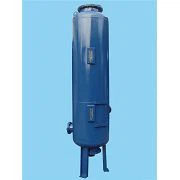
We offer some great products for this purpose. Check out our Stainless Steel Ion Exchange Softening Vessel For Resin Water Softener Equipment. It's made of high - quality stainless steel, which is durable and resistant to corrosion. This vessel provides a stable environment for the ion exchange resin to work its magic, ensuring that the water used in the pharmaceutical process is as pure as possible.
Another important aspect is the removal of heavy metal ions. Heavy metals like lead, mercury, and cadmium are extremely toxic, even in small amounts. In the pharmaceutical industry, their presence can have serious health implications for patients. Ion exchangers can selectively capture these heavy metal ions from water or other solutions. They have specific functional groups on their surface that have a high affinity for these metal ions. Once the ions are bound to the exchanger, they can be removed from the system, leaving behind a clean and safe solution.

For large - scale industrial water softening and heavy metal removal, we have the High Efficiency Hardness Removal Industrial Water Softener Equipment Sodium Stainless Steel Carbon Steel Ion Exchanger. This equipment is designed to handle high - volume water flow, making it perfect for big pharmaceutical manufacturing plants. It can efficiently remove a wide range of ions, including those responsible for water hardness and heavy metals, with high precision.
In the purification of pharmaceutical raw materials, ion exchangers play a vital role. Many raw materials contain impurities in the form of ions. These impurities can affect the purity, stability, and efficacy of the final drug product. Ion exchangers can be used to separate and purify these raw materials. For example, in the production of antibiotics, ion exchange chromatography can be used to isolate and purify the active ingredients.
Ion exchange chromatography works by passing a solution containing the raw materials through an ion exchange column. The column is filled with an ion exchange resin that has a specific charge. Depending on the charge of the target molecule and the impurities, they will interact differently with the resin. The target molecule can be selectively retained or eluted from the column, allowing for its purification. This method is highly effective in removing unwanted ions and other contaminants, ensuring that the raw materials meet the strict quality standards of the pharmaceutical industry.
When it comes to the production of injectable drugs, the purity of the solution is of utmost importance. Any contaminants, including ions, can cause adverse reactions in patients. Ion exchangers are used to remove any trace ions from the solution before it is filled into vials. This helps to ensure the safety and efficacy of the injectable drugs.
Moreover, ion exchangers are also used in the treatment of waste water generated by pharmaceutical manufacturing processes. Pharmaceutical waste water often contains a variety of ions, organic compounds, and other contaminants. Ion exchangers can be used in combination with other treatment methods to remove these pollutants. By removing the ions, the waste water can be made safer to discharge into the environment, reducing the environmental impact of the pharmaceutical industry.
In the development of new drugs, ion exchangers can be used in research and development processes. Scientists can use ion exchange techniques to study the properties of new compounds, separate different components of a mixture, and optimize the formulation of drugs. This helps in the discovery and development of more effective and safer drugs.
To sum it up, ion exchangers are incredibly versatile and useful in the pharmaceutical industry. From water treatment to raw material purification, from injectable drug production to waste water treatment, they are involved in almost every step of the pharmaceutical manufacturing process.
If you're in the pharmaceutical industry and looking for high - quality ion exchangers, we're here to help. Our products are designed to meet the strict requirements of the pharmaceutical sector, ensuring the safety and quality of your products. Whether you need a small - scale ion exchange vessel for a research lab or a large - scale industrial water softener for a manufacturing plant, we've got you covered. Don't hesitate to reach out and start a conversation about your specific needs. We're ready to work with you to find the best ion exchange solutions for your business.
References
- "Ion Exchange Technology in Pharmaceutical Applications" - Journal of Pharmaceutical Sciences
- "Water Treatment in the Pharmaceutical Industry" - International Journal of Pharmaceutical Technology
- "Ion Exchange Chromatography for Drug Purification" - Analytical Chemistry in the Pharmaceutical Field